HOPE WITH HARSHA - BECUASE EVERY POSSIBILITY BEGINS WITH HOPE !
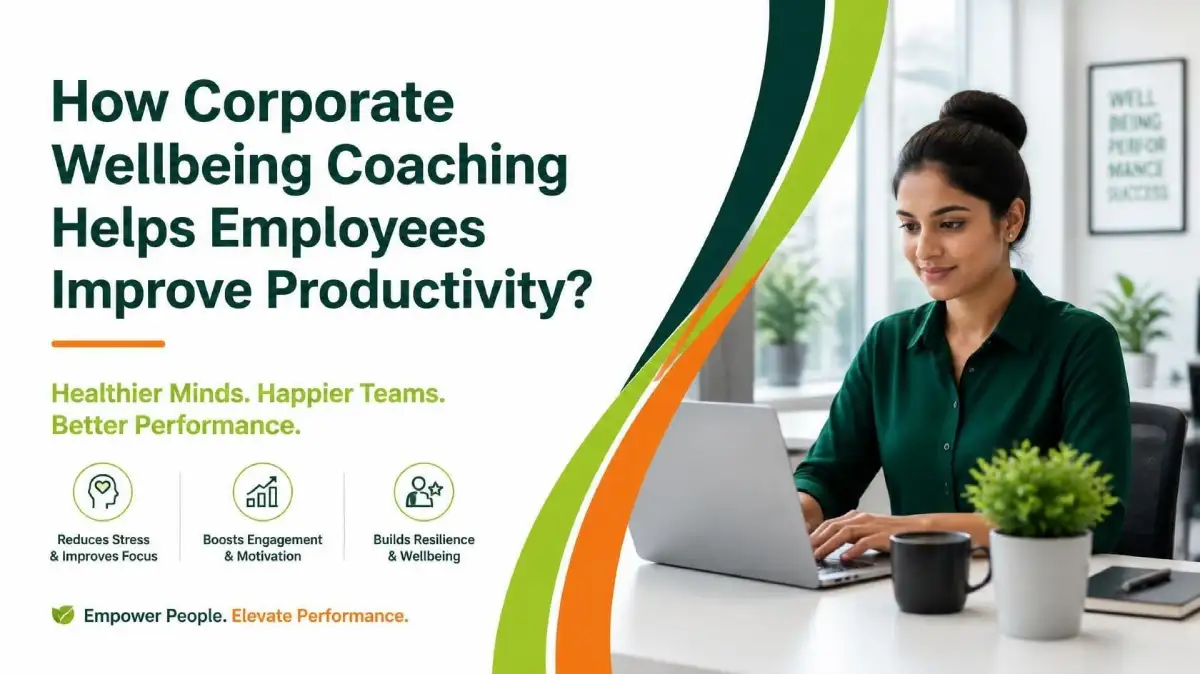
How Corporate Wellbeing Coaching Helps Employees Improve Productivity?
- On
- InBlog
Productivity dropping is not always about lazy employees. That is, in fact, the first major error of many organizations about their employees. A situation where an employee is present in the office for nine hours, answering emails, attending meetings, completing a report, and yet managing very little worthwhile job may be due to the problem. Causes for that can be quite a few like stress, lack of sleep, workplace pressure, confusion of priorities, emotional exhaustion, or even having the wrong workspace for relaxation and reset.
One practical way to tackle that is corporate wellbeing coaching. In Dubai, employee wellbeing has become a serious topic in the workplace. Yet, it is not restricted to gym memberships, fruit baskets, or a yoga session at your yearly wellness day, although those things are nice ones. Yet, they hardly address the real reasons behind low energy.
Born in Dubai, Hope with Harsha, founded by Harsha Nair, works mainly on the human side of performance at a corporate level. The concept is basically straightforward: healthier employees tend to think more efficiently, work better in teams, and respond to stress calmly.
Productivity Is More Than Working Faster
One of productivity’s misconceptions lies in associating it with doing it quickly. For example, an employee who replies to 70 emails at a time looks very productive in fact. But, the business is actually not getting the desired level of productivity if critical matters get held ups, concentration is continuously interrupted, and errors are increasing much. That is where corporate wellbeing coaching helps to highlight these areas of concern for employees to become their own detectives. For example a team member may multitask by switching from WhatsApp to meetings to spreadsheets and urgent requests. By evening, the person feels totally exhausted. Coaching can introduce simple habits around prioritising, taking short mental breaks, setting boundaries and recognising stress signals earlier.
They might sound like such insignificant things. In actual fact, small things make a difference and get compounded over a working life if implemented day in day out. To give an example, a sales team in Dubai could have their team members dealing with difficult clients that are spread across different time zones. Without recovery habits, the pressure gradually becomes the norm.
Staff members have come to even stop calling it stress. The usual phrase they use would be: “this is what work is like.” It is in such situations that wellbeing coaching could bring about a new kind of conversation altogether.
Stress Quietly Eats Into Performance
Stress does not always look dramatic. Sometimes it looks like forgetting small tasks. Sometimes it is impatience during meetings. Sometimes an employee reads the same email three times and still cannot decide what to reply. There can also be more sick days, low motivation and people avoiding difficult conversations.
Corporate wellbeing coaching helps employees understand what is happening before the situation becomes bigger. Coaching can support emotional awareness, practical stress management and healthier responses to pressure.
This is particularly relevant in fast-moving business environments such as Dubai, where employees can work with multinational teams, demanding customers and ambitious targets. A little pressure can improve performance. Too much pressure for too long usually does the opposite.
That contradiction is important. Companies sometimes believe that keeping employees constantly busy means getting more output. For a short period, maybe. Over months, tired people tend to make tired decisions.
Better Focus Can Improve Daily Work
Focus is one of those workplace skills that sounds simple but is surprisingly difficult. Open-plan offices, phone notifications, meetings, emails and constant task changes make deep concentration harder. An employee may start preparing a proposal and then receive three messages, attend a quick call and answer a colleague’s question. The proposal takes three hours instead of one.
Wellbeing coaching can encourage employees to understand their own distraction patterns. There may be practical changes such as planning important work during high-energy hours, reducing unnecessary interruptions, taking short breaks, and separating urgent work from genuinely important work. It is not about becoming perfectly disciplined. That would be unrealistic. The goal is better awareness and more consistent working habits.
Emotional Wellbeing Also Affects Teams
Productivity is not an individual matter only. One stressed employee can affect a whole team. A manager who is constantly irritated may create tension. A team member who is overwhelmed may stop communicating clearly. Then another employee spends time fixing misunderstandings.
The work keeps moving, but slowly. Corporate wellbeing coaching can help employees develop emotional regulation, communication awareness and healthier ways of handling workplace situations.
For example, after receiving negative feedback, an employee might immediately become defensive. Coaching can help create a small pause between the feedback and the reaction. That pause can change the entire conversation. This is useful for managers as well.
Leadership wellbeing matters because managers influence the emotional atmosphere of a workplace more than many companies realise.
Dubai Workplaces Need A Human Approach
Dubai has a very diverse workforce. Employees can come from different countries, professional backgrounds and communication styles. What feels normal to one person may feel stressful to another. This makes a one-size-fits-all wellbeing programme less useful.
A good corporate wellbeing coaching approach should consider real workplace situations. A junior employee may need confidence and communication support. A senior executive may struggle with decision fatigue. A new manager may need help balancing responsibility and personal boundaries. The same programme cannot always fit everyone.
Hope with Harsha in Dubai, through Harsha Nair, can position wellbeing coaching around these practical employee experiences rather than treating wellbeing as a decorative company benefit. And yes, workplace wellness can sound like corporate jargon. But when employees genuinely get better at handling pressure, the business notices it.
Better Energy Can Mean Better Decisions
Energy is not discussed enough when productivity is measured. At different times throughout the day, employees may not be mentally energized to the same degree. Sleep stress, eating patterns, amount of work, or emotional problems may all interfere with concentration.
Mental coaching will not substitute medicine or healthcare when they are really needed. Yet, it might help employees to see the importance of small everyday things contributing to good health.
An employee working right through lunch, not having breaks, and sleeping too late due to unfinished work, who starts the next morning already feeling a bit down is an example of how these things affect productivity and quality.
Moving away from a conversation about health problems to a conversation about wellness can bring awareness of healthier behaviors to the employee’s attention. Sometimes, instead of increasing the number of productivity apps, a more effective approach may consist of removing a single bad habit. This seems paradoxical largely, but in reality, it makes complete sense.
Employee Engagement Can Improve Too
People feel that their organisation sees them if they have a human touch and not just consider them as their respective job titles. Realising that corporate wellness programmes can be vehicles of change if executed authentically.
Employees will pick up on a company’s disingenuous promotion of worker wellness if the company at the same time promotes regular overtime as the norm. Coaching can only do so much here. Because of this, companies should back their coaching with practical workplace habits that are also for the employees like reasonable workload, manager support, clear expectations and a culture of respectful time management.
The effectiveness of wellbeing coaching can be enhanced if the workplace itself is not the one undermining the very benefits it seeks to bring about.
What Companies Can Expect From Wellbeing Coaching
The results should be viewed realistically. It may be unrealistic for an organization to suppose that one single session of coaching will produce some kind of miracle-like leap in productiveness. Human behavior is simply not so mechanistic as to be predicted so precisely.
What’s more meaningful are things like greater stress awareness, better concentration, enhanced communication skills, more positive workplace habits, stronger emotional resilience, and greater confidence in handling day-to-day stressors. These improvements over time often means more productive work.
Take it as an example, a staff member who is better at difficult conversations may spend less time dealing with repeated misunderstandings. A manager who recognises burnout signs earlier may respond before performance falls sharply. A team that communicates more openly may solve problems faster. These are not flashy results. They are useful results.
Why Harsha Nair’s Approach Matters in Dubai?
Harsha Nair and Hope with Harsha bring corporate wellbeing coaching into a setting where professional performance and personal wellbeing often overlap.
For Dubai businesses, this can be especially relevant because workplace expectations can be high, competition can be strong, and teams are often culturally diverse.
The strongest wellbeing programmes are not about telling employees to “just relax”. Employees already know they should relax. The harder part is understanding how.
Coaching can give employees a practical space to recognise patterns, think differently about pressure and develop habits that fit their actual working lives. That makes wellbeing less of a yearly event and more of an ongoing workplace capability.
A Practical Way to Start
Companies considering corporate wellbeing coaching do not necessarily need to launch a huge programme immediately. A smaller starting point can be sensible.
A company might begin with a wellbeing workshop for managers, followed by individual coaching opportunities for employees. Feedback can then show which areas need more attention.
Perhaps stress is the biggest issue. Perhaps communication. Perhaps employees are struggling with work-life boundaries or constant mental fatigue. The answers will differ from company to company. And that is okay.
The important part is measuring more than attendance. Employee feedback, engagement, workplace behaviour and perceived stress can provide better clues about whether the programme is actually useful.
The Bigger Point
So, how corporate wellbeing coaching helps employees improve productivity? It helps by working on the human factors behind performance.
Employees are not machines where more hours automatically produce more output. Focus, emotional stability, energy, communication and recovery all influence the quality of work.
For organisations in Dubai, working with a corporate wellbeing provider such as Hope with Harsha can be one practical way to make employee wellbeing part of everyday performance.
The goal is not to make every employee cheerful every morning. That would be unrealistic.
The goal is healthier employees who can handle pressure, think clearly, communicate properly and keep performing without constantly running on empty. That is where wellbeing starts becoming a business advantage, not just another HR activity.
FAQs
What is corporate wellbeing coaching?
Workplace well-being programs empower company staff through training in stress management, enhancing focus, emotional fitness, effective communication and cultivation of healthy working patterns. It helps maintain employee happiness while at the same time, boosting performance, involvement and production levels among all types of departments and jobs.
Can wellbeing coaching improve employee productivity?
Wellbeing coaching is a great tool for productivity as it assists employees in dealing with stress, increasing their concentration, identifying work habits that negatively affect their work, and learning how to face work requirements that come from a work environment that is very demanding. While results will be different according to the setting of employment, when an individual is happier and has good habits, the outcome is normally a more productive workplace, easier and more comfortable communication, better communication, and a more driven and committed workforce.
Why is corporate wellbeing coaching useful in Dubai?
Workplaces in Dubai are typically composed of diverse and energetic teams navigating fast-track environments alongside demanding goals, client demands and work schedules that cross international time zones. Business wellness coaching can assist employees in handling stress, communication difficulties and burnout, through the development of realistic behavior changes which help create a better work-life balance, mostly in Dubai's aggressive professional setting.
How can companies start corporate wellbeing coaching?
Companies could start with a well-being focused workshop, coaching for managers or employee coaching programme. Once they get the feedback from employees, the companies can see what are the common issues such as stress, communication problems, pressure of the workload or burnout, and then they could develop a much bigger well-being strategy gradually.