
HOPE WITH HARSHA - BECUASE EVERY POSSIBILITY BEGINS WITH HOPE !
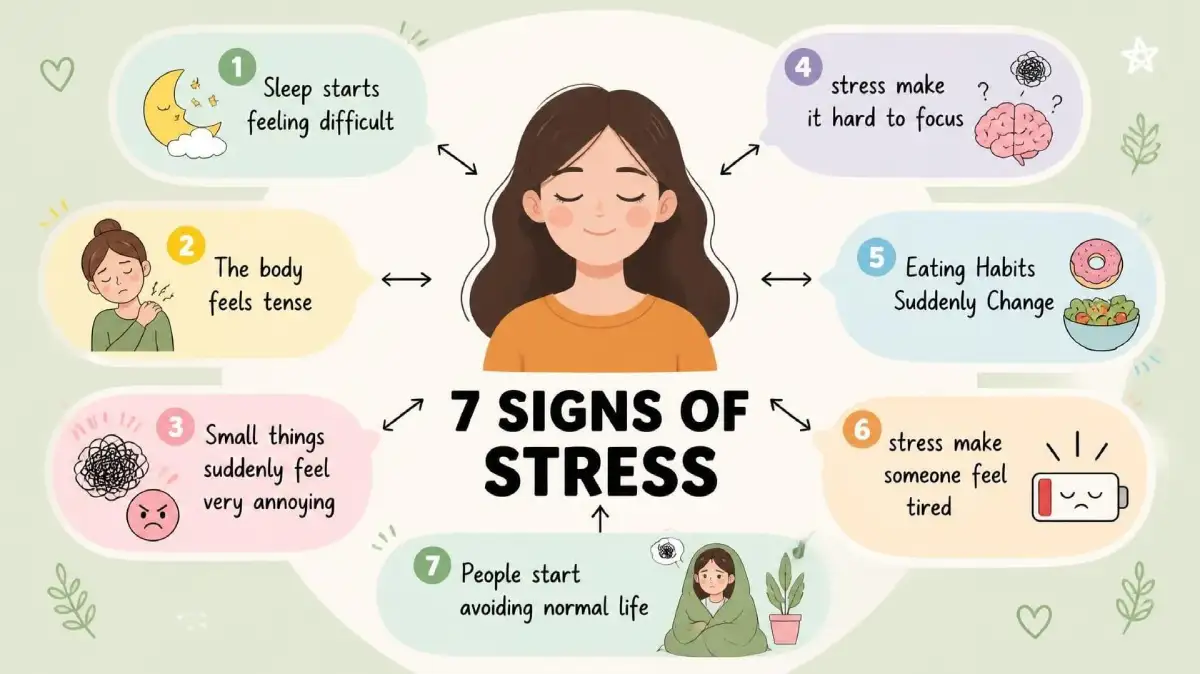
What are 7 signs of stress? Know with Harsha Nair
- On
- InBlog
Stress does not always arrive with a big warning. Sometimes it starts quietly. A shorter temper. A strange headache. Trouble sleeping even when the body feels tired. A person may keep doing normal things while feeling that something inside is not quite right.
This is something Harsha Nair of Hope with Harsha in Dubai has seen through conversations with people dealing with busy workdays. Family pressure. Changes in life. Money worries. Relationship problems. Sometimes there is no single reason. There is just too much happening at the same time.
Stress can look different from person to person. Some people become quiet. Others talk more. Some eat less. Others keep reaching for snacks without really noticing. That is why knowing the common signs can be useful. Here are 7 signs of stress that can show up in everyday life.
What are the seven common signs of stress?
The seven common signs are sleep problems. Headaches or body tension. Mood changes. Poor focus. Changes in eating. Feeling tired often. And wanting to avoid people or normal activities.
These signs do not always mean stress. They can happen for other reasons too. Still. When several signs appear together and stay around for a while. Stress may be worth considering.
1. Sleep starts feeling difficult
Sleep is often one of the first things affected by stress. A person may lie in bed at night and suddenly remember ten things that need attention. An unfinished work task. A message that was not answered. A bill. A family problem. The mind keeps moving while the body wants to rest.
Some people struggle to fall asleep. Others wake up very early and cannot get back to sleep. Some sleep for many hours but still wake up feeling tired.
A few rough nights can happen to anyone. The concern grows when poor sleep becomes a regular pattern.
Harsha often notices that people describe this as having a busy mind. That phrase makes sense. The body is resting but the thoughts seem to be holding a meeting at two in the morning.
A simple evening routine can sometimes help. Less screen time. A quieter room. A regular bedtime. Small changes can matter more than people expect.
2. The body feels tense or uncomfortable
Stress is not only a feeling in the mind. The body can react too. Shoulders may stay tight. The jaw may clench without notice. The neck can feel stiff. Headaches may appear. Some people notice stomach discomfort or a general feeling of being restless.
Think about sitting through a long work meeting while quietly worrying about something. The shoulders slowly rise. The hands tighten. The breathing becomes shallow. None of this may be planned.
Sometimes that tension in your body can stay there long after the stressful experience has gone. Consistent motion can assist the body in removing some of that tension which is kept inside. Taking a brief stroll around the area. Light stretches. A couple of relaxing breaths. Even a break from the work desk for just 5 minutes can prove quite helpful.
So often we disregard these tiny signals from our bodies. It is common to attribute them to the chair, the weather or a mainly busy day. Perhaps to some extent those conditions may be the factors. Still, continuous tension is a call for intervention.
3. Small things suddenly feel very annoying
A person who is usually patient may become irritated by tiny things. A slow internet connection can feel unbearable. Someone asking the same question twice can cause an unusually sharp response. Traffic feels worse than normal. Noise becomes harder to tolerate.
This does not make someone a bad person. Stress can make patience feel like a limited resource.
Harsha has noticed that people sometimes feel guilty after reacting this way. They wonder why such a small thing made them so angry. Often the small thing was only the final drop. There may have already been tiredness. Worry. Pressure. Or too many demands.
Mood changes can also go in the other direction. A person may feel sad. Nervous. Overwhelmed. Or unusually emotional. When the reaction feels much bigger than the situation. It can be useful to pause and ask what else might be going on.
4. Why does stress make it hard to focus
Stress can make simple tasks feel strangely difficult. A person may read the same email three times. A short conversation may be hard to follow. Work that normally takes twenty minutes can take an hour. Forgetting small details can become common. The mind is not necessarily lazy. It may simply be busy dealing with worry.
Imagine trying to finish a report while thinking about a family issue at the same time. Part of the attention is on the report. Another part is running through the problem. That split can leave very little energy for the task in front.
This can become frustrating. Then frustration creates more stress. It becomes a tiring little loop.
Breaking a large task into smaller steps may help. Writing down worries instead of carrying every thought in the head can also make some space. Sometimes the best answer is simply taking a proper break.
5. Eating habits suddenly change
Stress can affect appetite in different ways. Some people lose interest in food. They skip breakfast and then realise late in the afternoon that almost nothing has been eaten.
Others eat more when feeling worried or tired. Snacks become a quick comfort. Food can become something to reach for during a difficult evening. Neither reaction should be treated as a simple lack of discipline.
Stress can change daily routines. When sleep is poor and the mind feels overloaded. Eating can become another area that gets messy.
Noticing the change is a useful first step. Regular meals. Enough water. And keeping easy healthy food around can make daily life a little easier.
If major changes in appetite continue. Especially with other worrying symptoms. A healthcare professional can help check what is happening.
6. Why does stress make someone feel tired all the time
Feeling tired is another common sign. Stress can keep the body in a state of alertness. Even when nothing dramatic is happening. That can be draining.
A person may wake up tired. Get through work with effort. Come home and have no energy left for anything else. Simple jobs such as cooking or answering messages can suddenly feel like big jobs. There is a difference between being tired after a busy day and feeling worn out most days.
Rest is important. But rest does not always mean sleeping. A quiet walk. Time away from work. Sitting without a phone. Talking with someone trusted. These can give the mind a little breathing room. Still. Ongoing tiredness can have many causes. Stress is only one possibility. Persistent fatigue should not automatically be blamed on stress.
7. People start avoiding normal life
This sign can be easy to miss. A person may stop meeting friends. Ignore messages. Avoid family gatherings. Cancel plans again and again. Things that once felt enjoyable may suddenly feel like work.
After a stressful week. Wanting some quiet time is completely normal. The concern is when avoiding people becomes the usual pattern. Isolation can sometimes make stress feel even heavier. There is less conversation. Less laughter. Less outside perspective. Problems can grow larger inside the head when there is no space to talk about them. A small step can be enough. Reply to one message. Sit with a friend for half an hour. Take a short walk outside. There is no need to become social overnight.
When should someone take stress seriously?
Stress deserves attention when several signs appear together or continue for weeks. Some useful things to notice are –
- Sleep is regularly disturbed.
- Mood changes are affecting relationships.
- Work or study is becoming harder.
- Eating habits have changed a lot.
- The body often feels tense or uncomfortable.
- Normal activities no longer feel enjoyable.
Stress becomes more important to address when daily life starts shrinking around it. If symptoms feel severe or suddenly become worse. Professional support from Hope with Harsha in Dubai can be a good idea. A doctor or qualified mental health professional can also check whether something else may be causing the symptoms.
Can simple daily habits really reduce stress?
Small habits can help. They are not magic fixes. Still. They can give the mind and body a better chance to settle.
A short daily walk can be useful. Regular sleep times can help. Eating meals at roughly normal times can bring some order back. Talking openly with a trusted person can stop worries from staying locked inside.
It may also help to reduce the habit of saying yes to everything. Harsha Nair and Hope with Harsha in Dubai focus on the human side of these experiences.
Conclusion
Sometimes people do not need another lecture about productivity. They need a place where the messy part of life can be spoken about without feeling judged.
That matters because stress is not always visible. Someone can look completely fine at work and still feel exhausted inside.
There is also no prize for waiting until things become unbearable. Noticing the early signs can be enough to make a small change. A proper meal. An evening without work messages. A walk. A conversation. A little less pressure. None of these fixes every problem. But sometimes the first useful step is simply noticing that something has changed.
FAQs
Is stress always harmful?
No. Short term stress can help someone respond to pressure and complete an important task. Problems may begin when stress stays for too long without enough rest or support. Long lasting stress can affect sleep. Mood. Focus. Eating habits. And daily energy.
How can someone know if stress is causing symptoms?
It is not always possible to know by symptoms alone. Stress can look like many other problems. Notice when symptoms started and what was happening around that time. If symptoms continue or feel serious. Speak with a healthcare professional for proper guidance.
What is one simple way to feel less stressed?
A short break can be a good starting point. Step away from work. Put the phone down. Take a slow walk. Drink some water. Then return to the task. Small breaks may not solve the cause. But they can reduce the immediate pressure.
When should professional help be considered?
It is advisable to seek professional help if stress is hampering sleep to an extent that work relations, eating or even simplest pleasures cease to become enjoyable. Seeking consulting the doctor becomes an emergency when a person feels he/she is at the end of the rope and so unable to cope with stress. Besides offering support, a doctor or a qualified mental health professional can also help in the identification of other possible causes of the problem.