
HOPE WITH HARSHA - BECUASE EVERY POSSIBILITY BEGINS WITH HOPE !
How To Set Personal Goals And Achieve Them?
- On
- InBlog
Harsha still remembers the first goal that ever failed. It was a plain one. Wake up at five every morning. By day four the alarm was off and the blanket was back on. Nobody was angry about it except Harsha. That tiny flop taught more than any thick book did. Hope With Harsha started from moments like that.
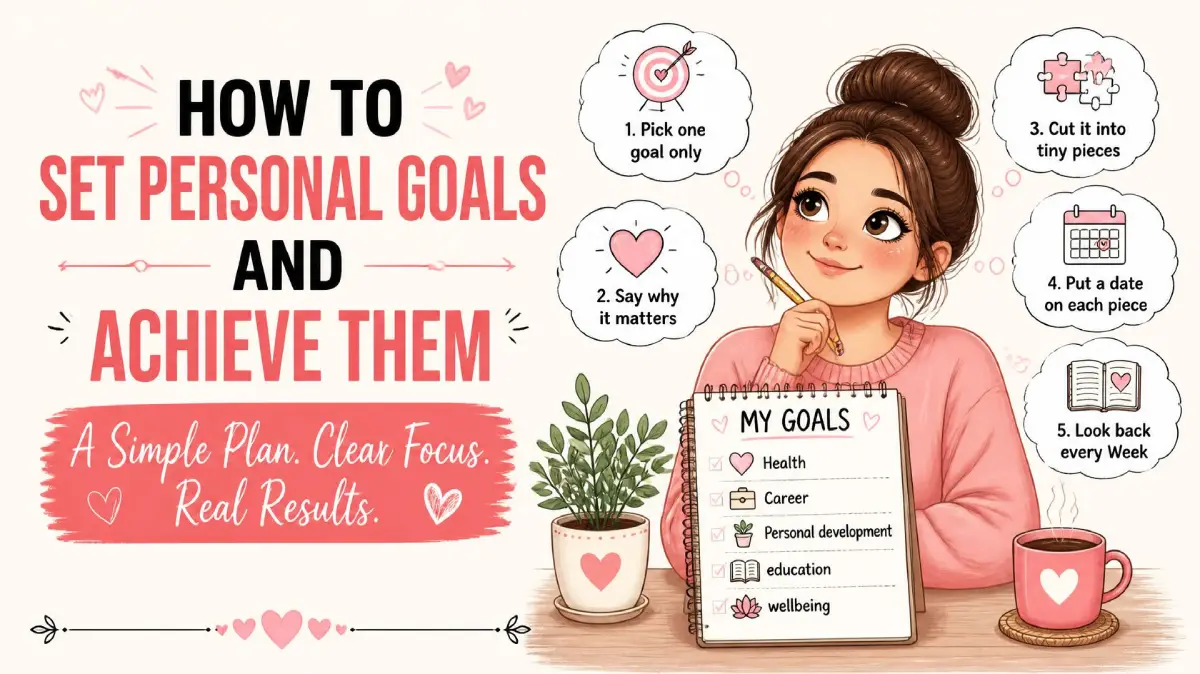
A real person tries a thing and gets it wrong first and then tries again a bit smarter. People set goals for themselves and work towards achieving them. As you set personal goals, you would determine what you hope to achieve in your different life areas: personal development, health, and wellbeing, career, and education.
Everybody talks about them in January. By March the talking mostly stops. This post is about the quiet middle part where real change happens. It is not fancy. Some of it might even sound too simple. Harsha thinks simple is the whole point.
How To Set Personal Goals And Achieve Them?
Short answer first. Pick one thing that matters. Make it small enough to start today. Write it down on paper. Check on it every week. That is pretty much it. Knowing the steps is easy. Doing them on a boring Tuesday when nobody is clapping is the hard bit.
Here are the steps in plain words
- Pick one goal only
- Say why it matters
- Cut it into tiny pieces
- Put a date on each piece
- Look back every Week
Harsha noticed that most people pick five goals at once. Get fit. Save money. Learn guitar. Read more. Sleep early. By February all five sit in a drawer together. One goal: getting all the energy feels slow but it works better. Maybe that is not true for everyone. For Harsha it was true every single time though.
The why part gets skipped a lot. A goal without a reason is like a bus with no stop. It keeps moving but nobody knows where it is going. When Harsha wanted to learn guitar the reason was simple. Dad used to play old songs on a dusty guitar and the whole house felt happy then. That reason was strong enough to survive many sore fingers. Wanting to look cool would not have lasted a week. Probably.
What Makes A Good Personal Goal?
A good goal is clear and small and has a date. It should feel a little bit exciting but not scary. If the goal makes the tummy hurt then it is too big. If it feels boring then it is too small. The right size feels like a gentle push from behind.
- Clear enough that a child could say if it is done
- Small enough to start today
- Has a date or a number inside it
- Matters to the person and not only to other people
A little table helps here:
| Vague Goal | Clear Goal |
|---|---|
| Get fit | Walk ten minutes after dinner |
| Save money | Put 500 rupees aside each Friday |
| Read more | Read two pages before bed |
| Learn guitar | Practise one chord every day |
| Sleep early | Phone off by ten at night |
See the difference. The right side can be checked with a yes or a no. The left side is just a wish wearing a nice coat.
Why Do Most Personal Goals Fail?
Mostly because the goal is too fuzzy. Being healthier sounds nice but what does it even mean? Walking ten minutes after dinner is clear. A tired brain can follow that. The second reason is a big start. People run five kilometres on day one and then cannot walk on day two. The third reason is nobody watching. A secret goal is very easy to drop. Telling one friend changes a lot. The fourth reason is having no plan for bad days.
Bad days always come. Rain comes. Guests come. Fever comes. Harsha started writing a backup plan beside every goal. If it rains then walk inside the house for ten minutes. It sounds silly. It works though. A backup plan means a bad day does not turn into a bad week.
- The goal is too vague
- The start is too big
- Nobody knows about it
- No plan for bad days
How Long Does It Take To Build A Habit?
People love saying twenty one days. Harsha used to believe that too. Then a walking habit took almost two months to stick. Studies on this say the time changes a lot from person to person. Some habits need about three weeks. Others need more than eight months. So a missed day is not a disaster. It is just a missed day. The real danger is missing two days in a row. That is when the old routine slides back in very quietly.
Here are rough timings from Harsha’s own notebook. These are only guesses from real life and not science.
| Habit Type | Rough Time To Stick |
|---|---|
| Drinking a glass of water after waking | About 3 weeks |
| Reading before bed | About 5 weeks |
| Walking every day | About 2 months |
| Exercise routine | 2 to 3 months |
| Big lifestyle change | 6 months or more |
The funny thing is that easy habits feel easy only after they stick. In the first week even drinking water felt like a chore. Harsha kept forgetting. Then a glass was placed next to the bed the night before and suddenly it just happened. Making the thing easy to do beats being strong every time.
What Should Be Done When Motivation Disappears?
It will disappear. Everyone gets there. Harsha once skipped a writing goal for three weeks because work got heavy and the mood was bad. Feeling guilty about it did nothing at all. What helped was shrinking the goal. Write one sentence a day and not one page. One sentence feels silly. But it keeps the thread alive. A tiny streak is far easier to restart than a big one.
Here is what usually helps
- Make the goal ten times smaller
- Remember the reason it started
- Rest for a day without guilt
- Tell a friend about the struggle
- Change the place where the goal happens
That last one is a strange one. Harsha moved the writing from the desk to the balcony and the words came back. No idea why really. Maybe the desk had too many bills sitting on it. Maybe the brain just wanted some fresh air.
There is also this thing about waiting for the mood. The mood almost never shows up first. Usually the action comes first and the mood follows ten minutes later. Putting on the walking shoes is the hardest part. After that the legs mostly take over.
Is It Better To Set Daily Or Yearly Goals?
Both matter but in different ways. A yearly goal is like a map. A daily goal is like the next step on the road. Harsha keeps one big goal for the year and then three small tasks for each week. It is not perfect. Sometimes the weekly tasks change completely by Thursday. That is okay really. The map stays and the road bends a bit.
Tracking helps too. A cheap notebook is enough. Harsha draws a small box for every day and puts a tick inside. Watching the ticks pile up feels oddly good. Every Sunday takes ten minutes to look back and see which boxes stayed empty and why. Usually the reason is boring. Late meeting. Tired legs. A cricket match. Nothing deep. And once the reason is clear the fix is usually small.
Some people like apps for this. Harsha tried three of them. They all buzzed too much and felt like a nagging aunt. The paper was calmer. Maybe that is just a personal taste thing so try both and see.
Final Thoughts
Goals are small promises kept again and again. That is the idea behind Hope With Harsha. Start tiny. Be a little kind when it falls apart. Then pick it up again the next morning without a big speech.
The people who get there are rarely the strongest ones. They are just the ones who came back after missing a day.
FAQs
How many goals should a person start together?
One goal is best at the start. Two is the limit for most busy people. Too many goals split the energy and every one of them moves slowly. Finish or pause one goal before adding another. Small wins build confidence.
What is a simple SMART goal?
SMART means Specific Measurable Achievable Relevant and Time bound. In simple words the goal should be clear and countable and doable and important and have a date. Reading two pages every night for thirty days is a really good example.
What if a goal is missed for a day?
Nothing is ruined. Look at why the goal slipped and fix that one thing. Make the next step smaller and restart the very next day. Missing once is normal but missing twice in a row needs a really quick reset.
How can motivation stay high for longer?
Link the goal to a reason that feels personal. Keep a visible tracker and tell one friend. Reward small wins with something simple like a favourite snack. Rest when tired because motivation grows from progress and not from pushing hard.